
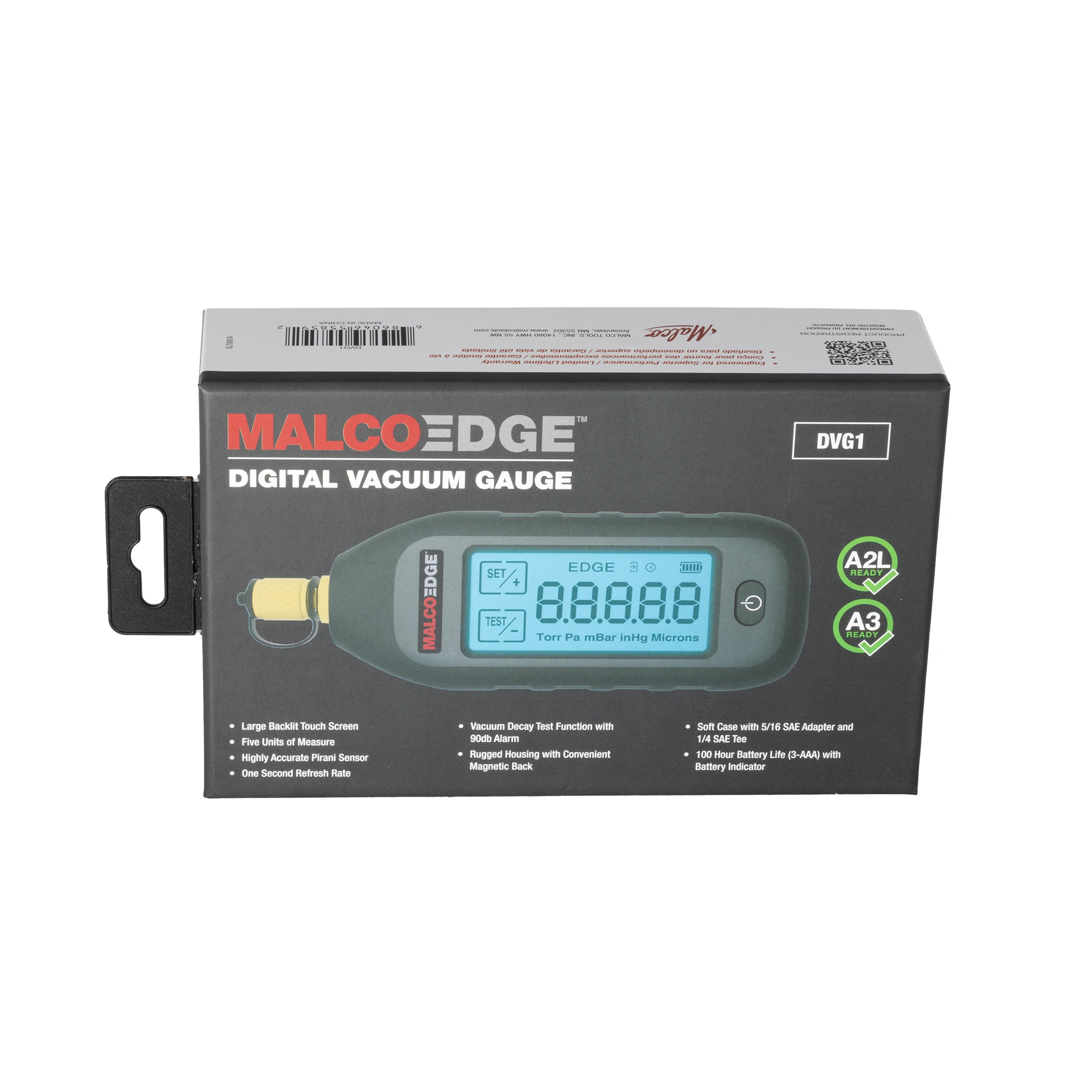
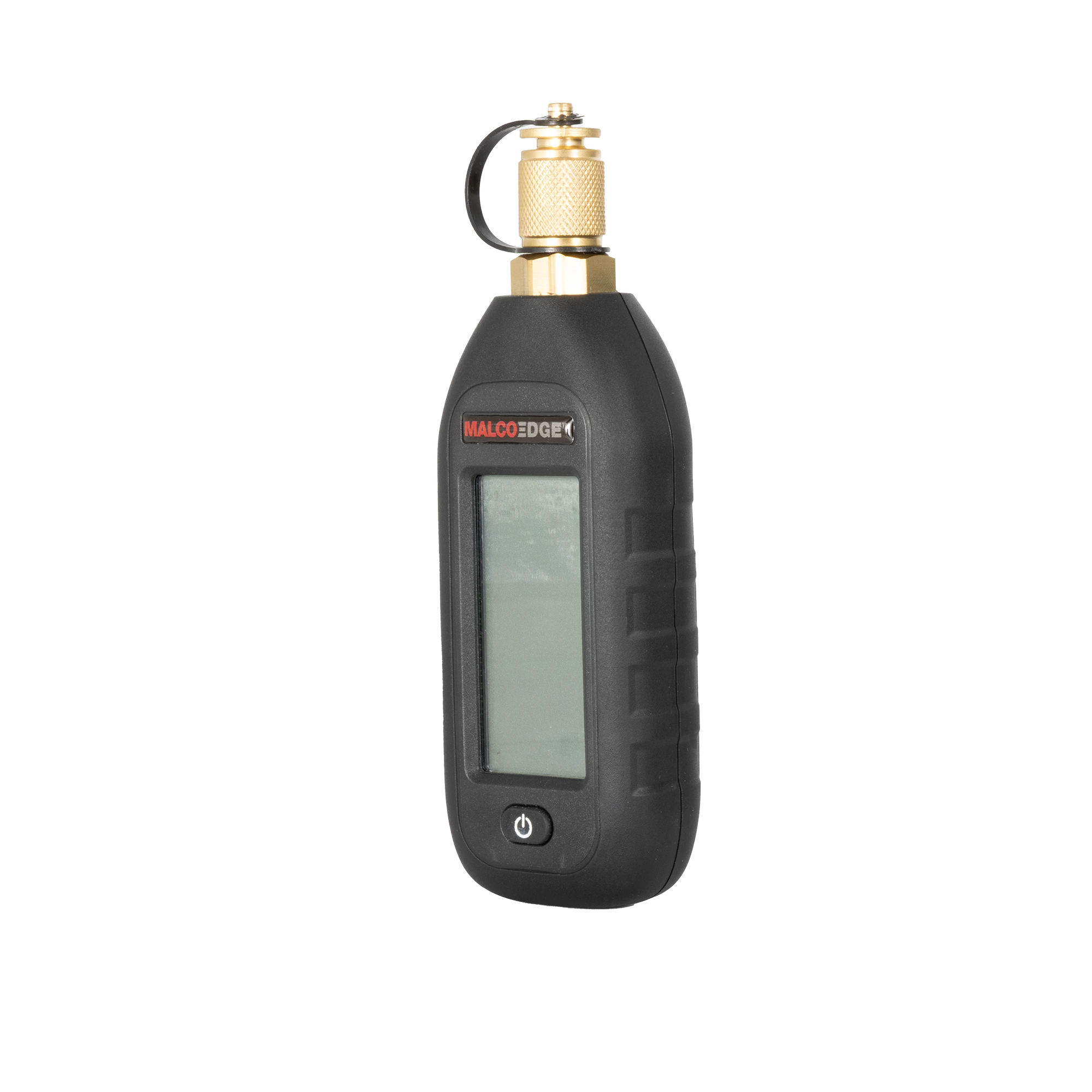
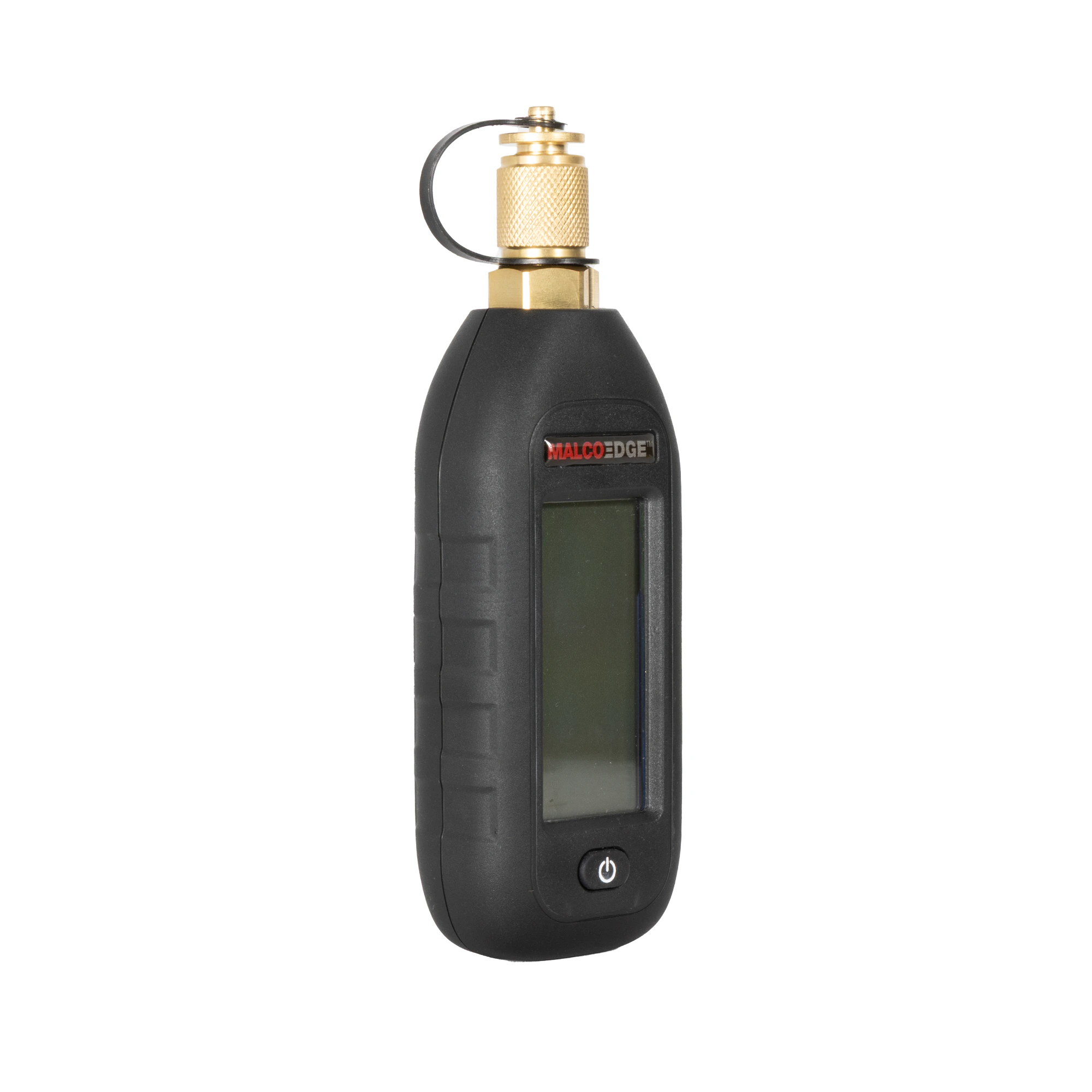

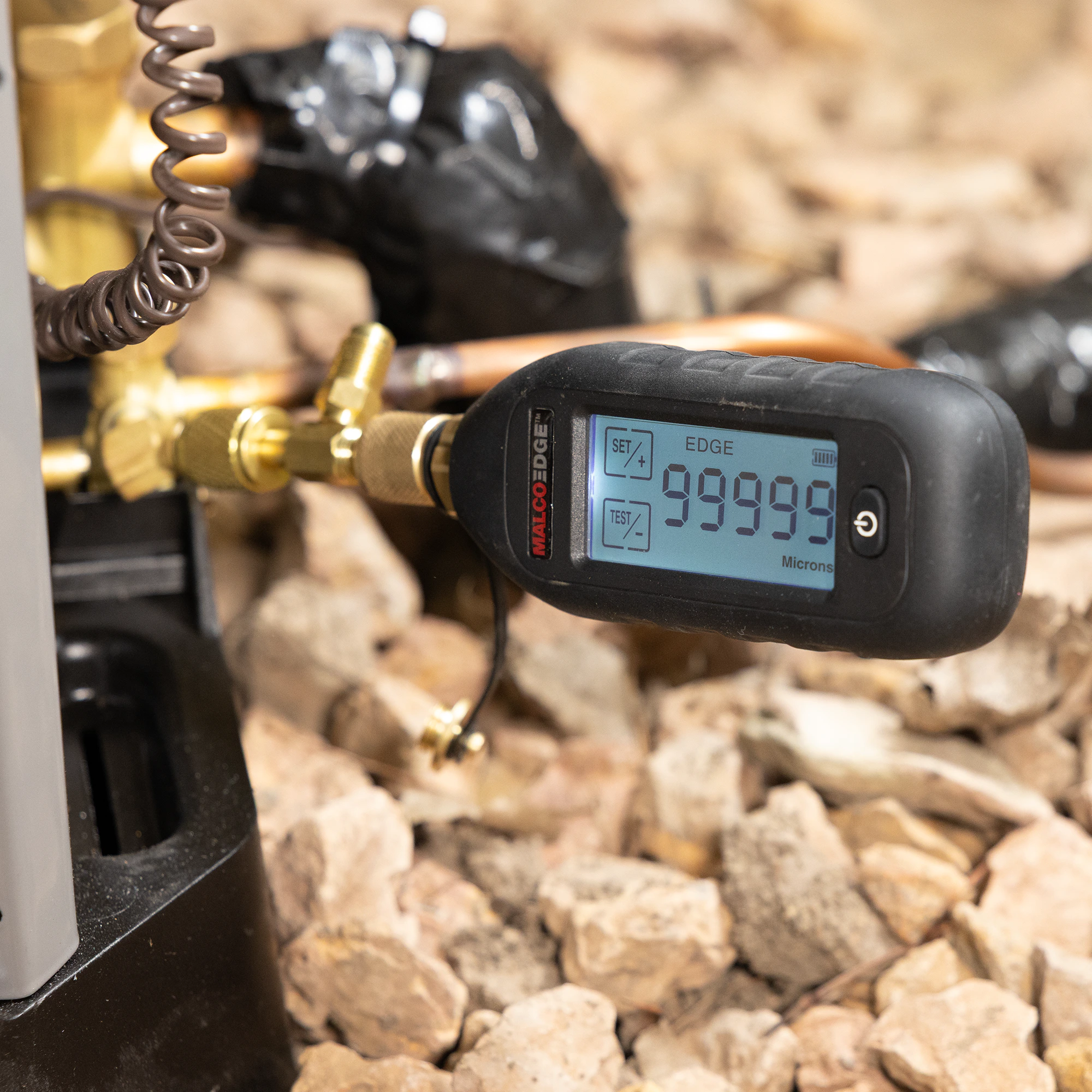
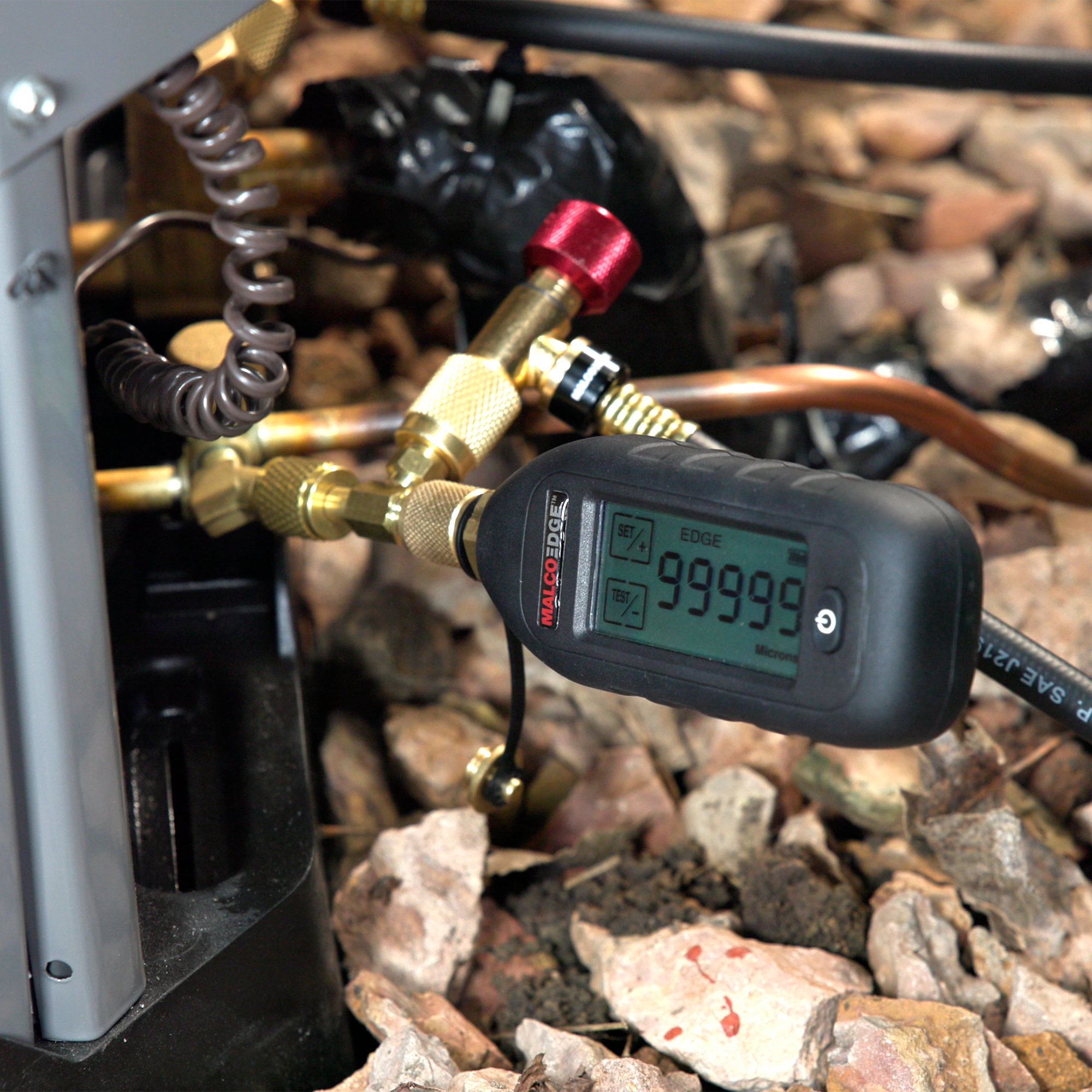
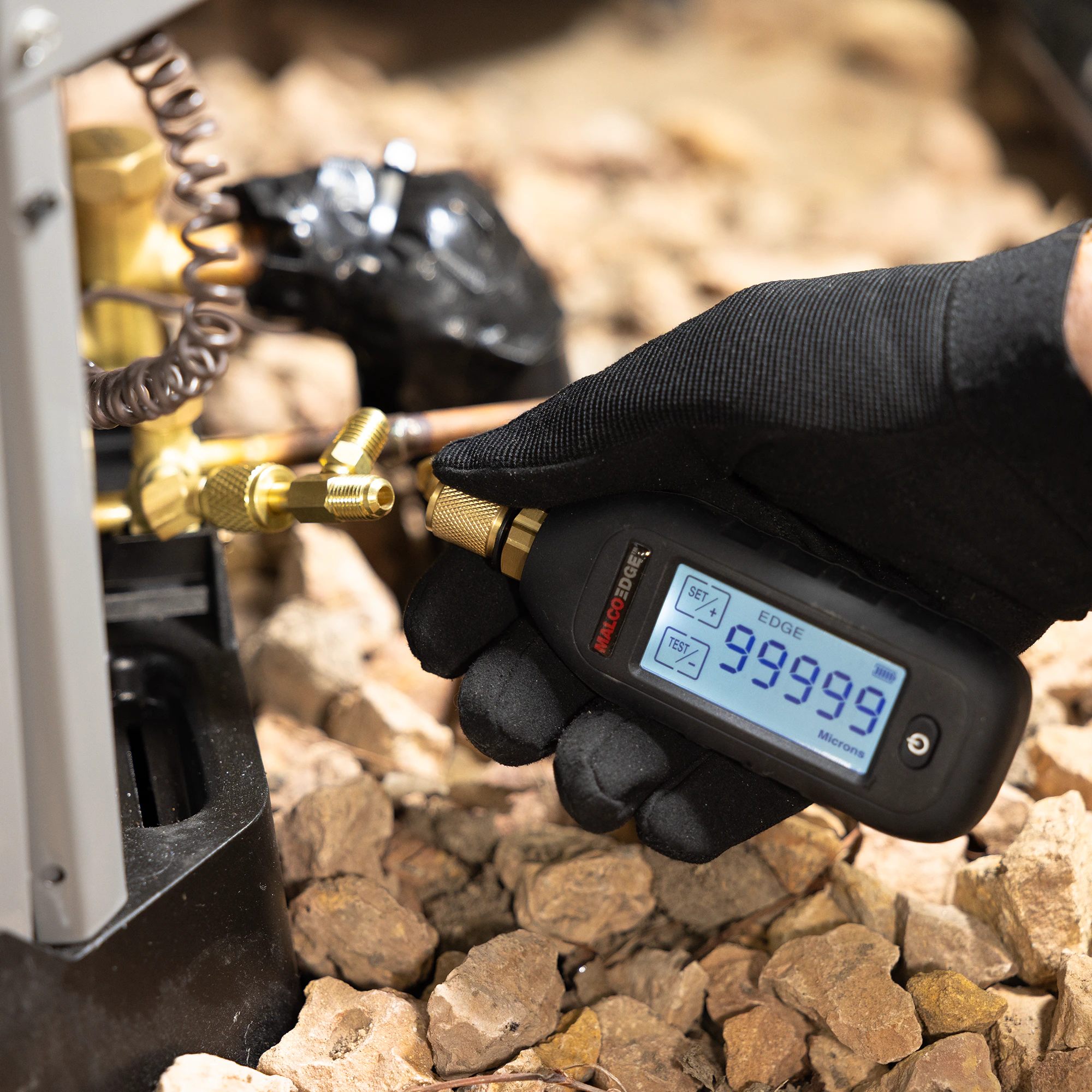


MalcoEdge™ DVG1 Digital Vacuum Gauge
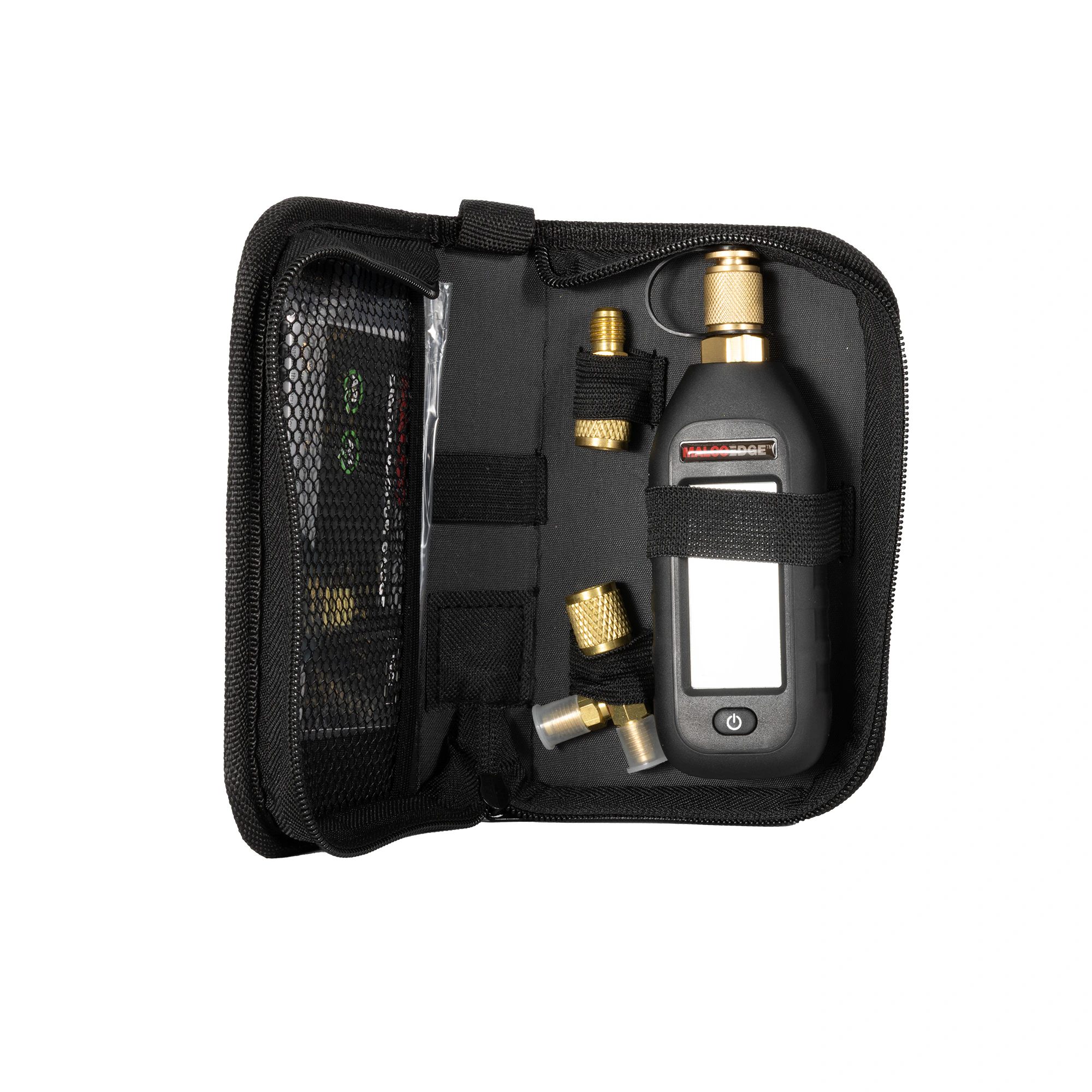
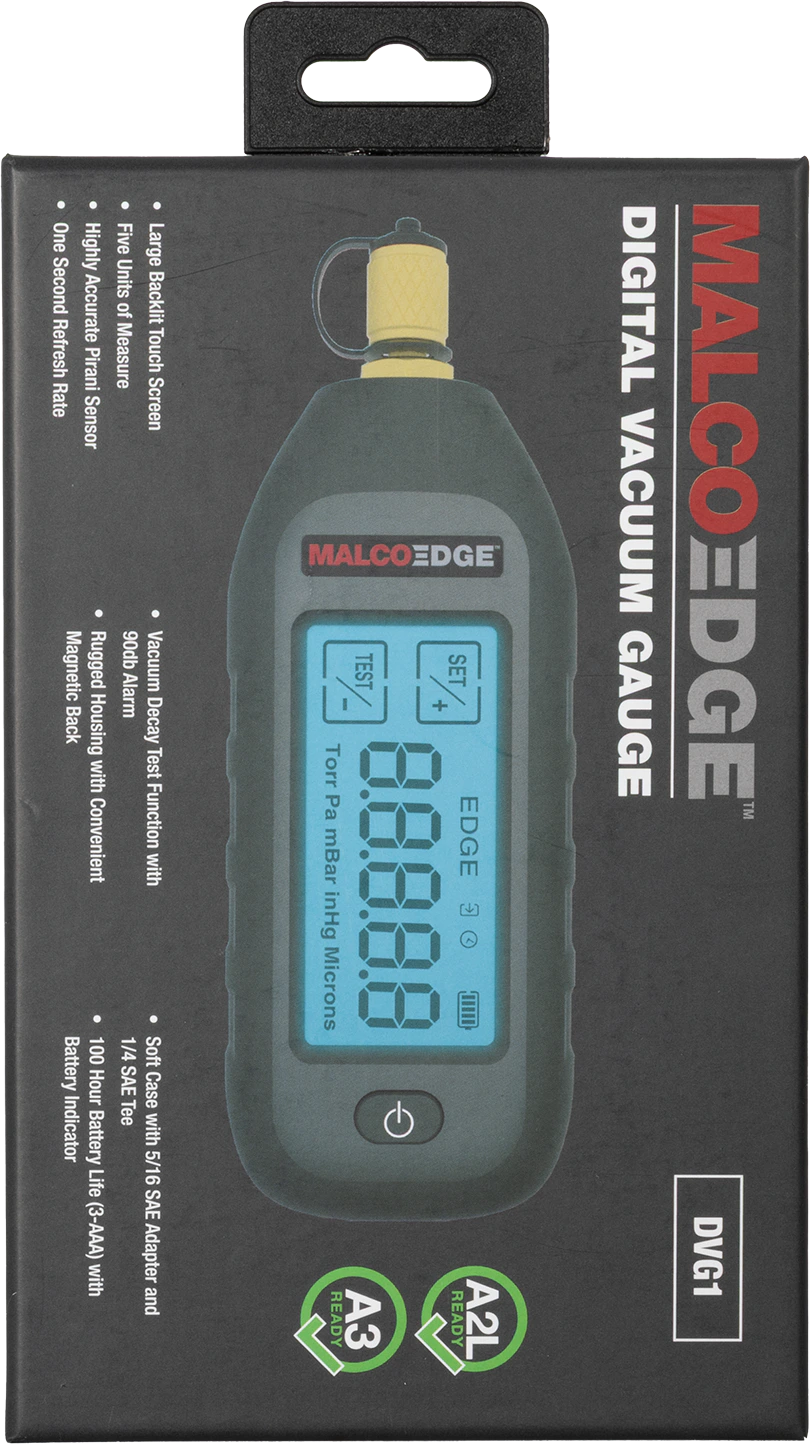
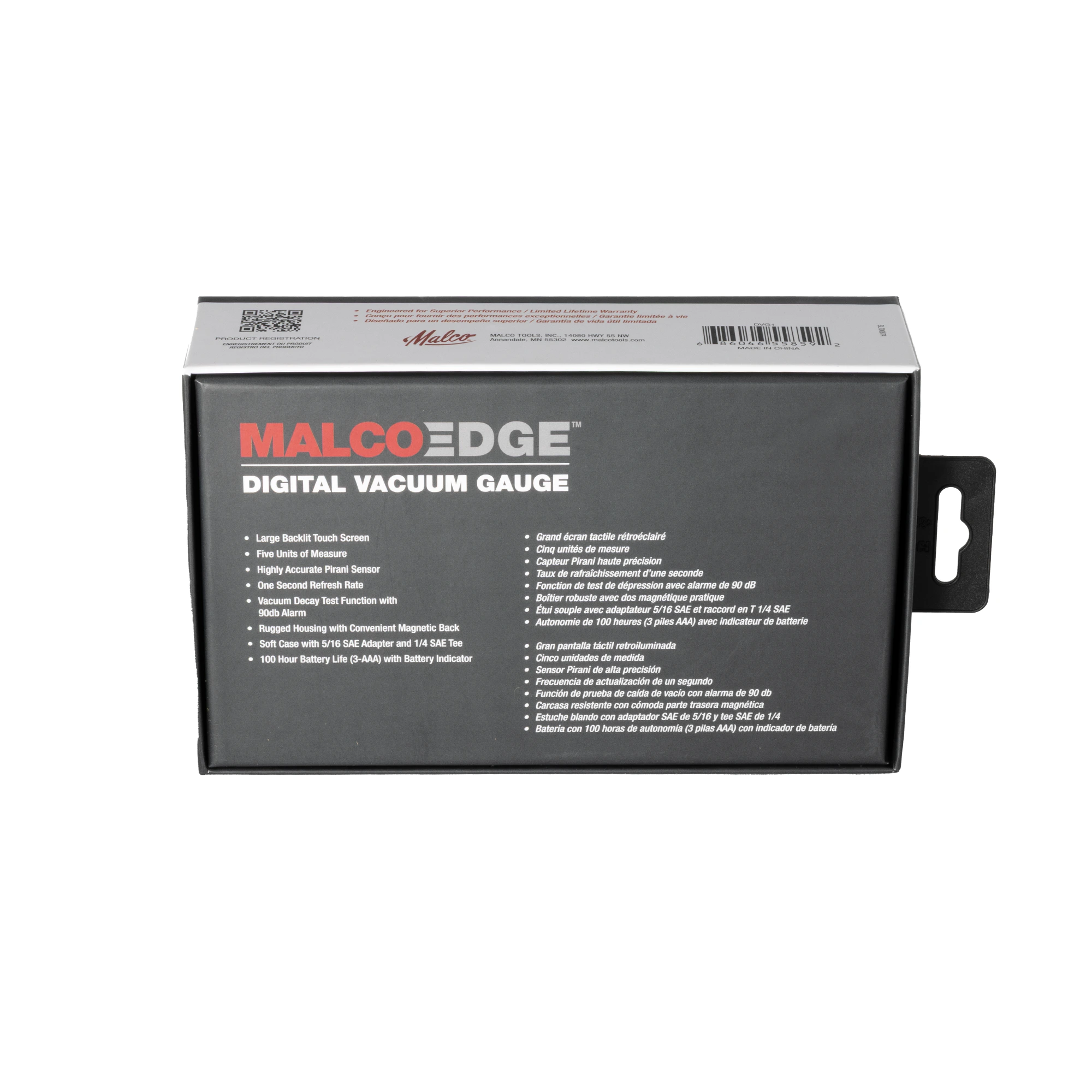
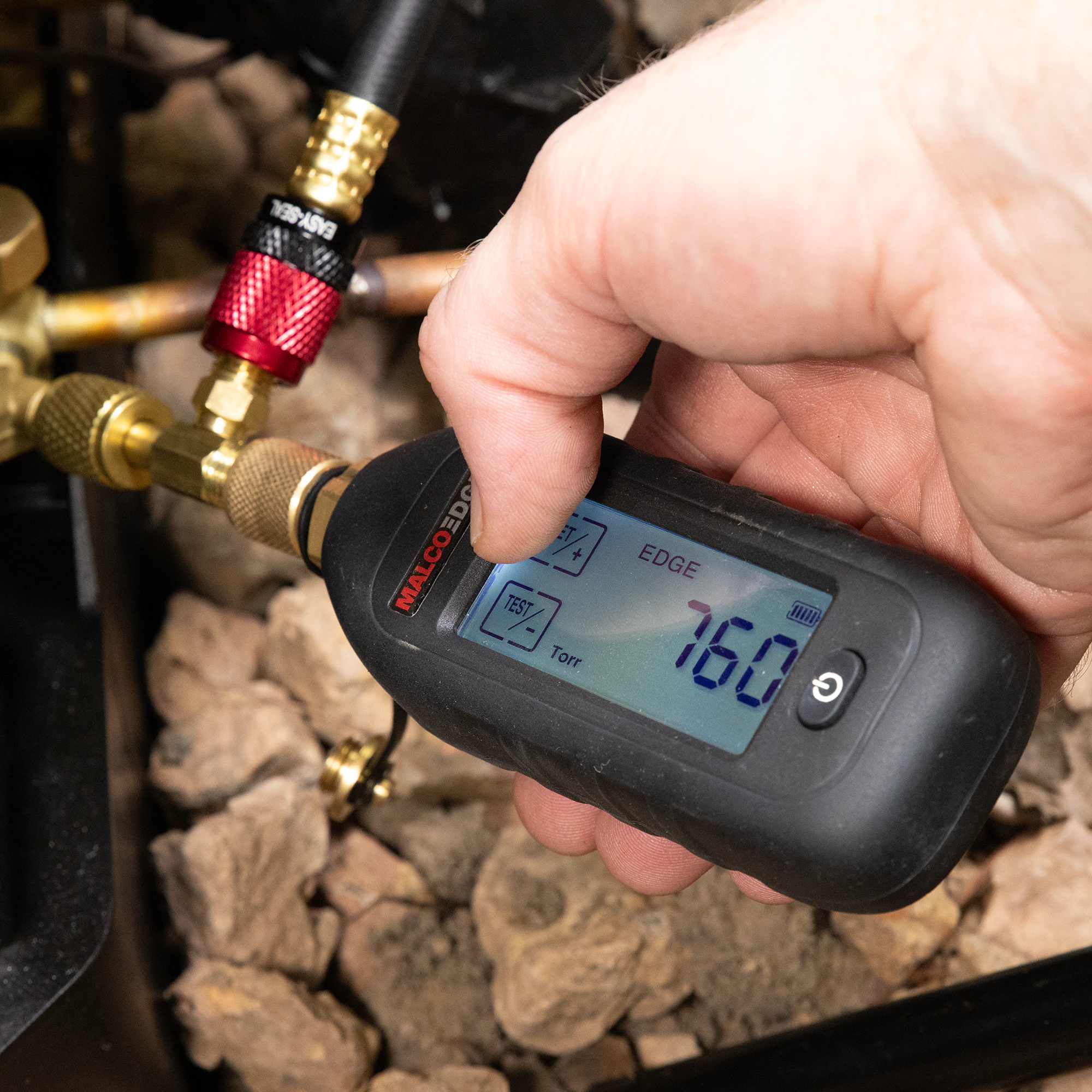
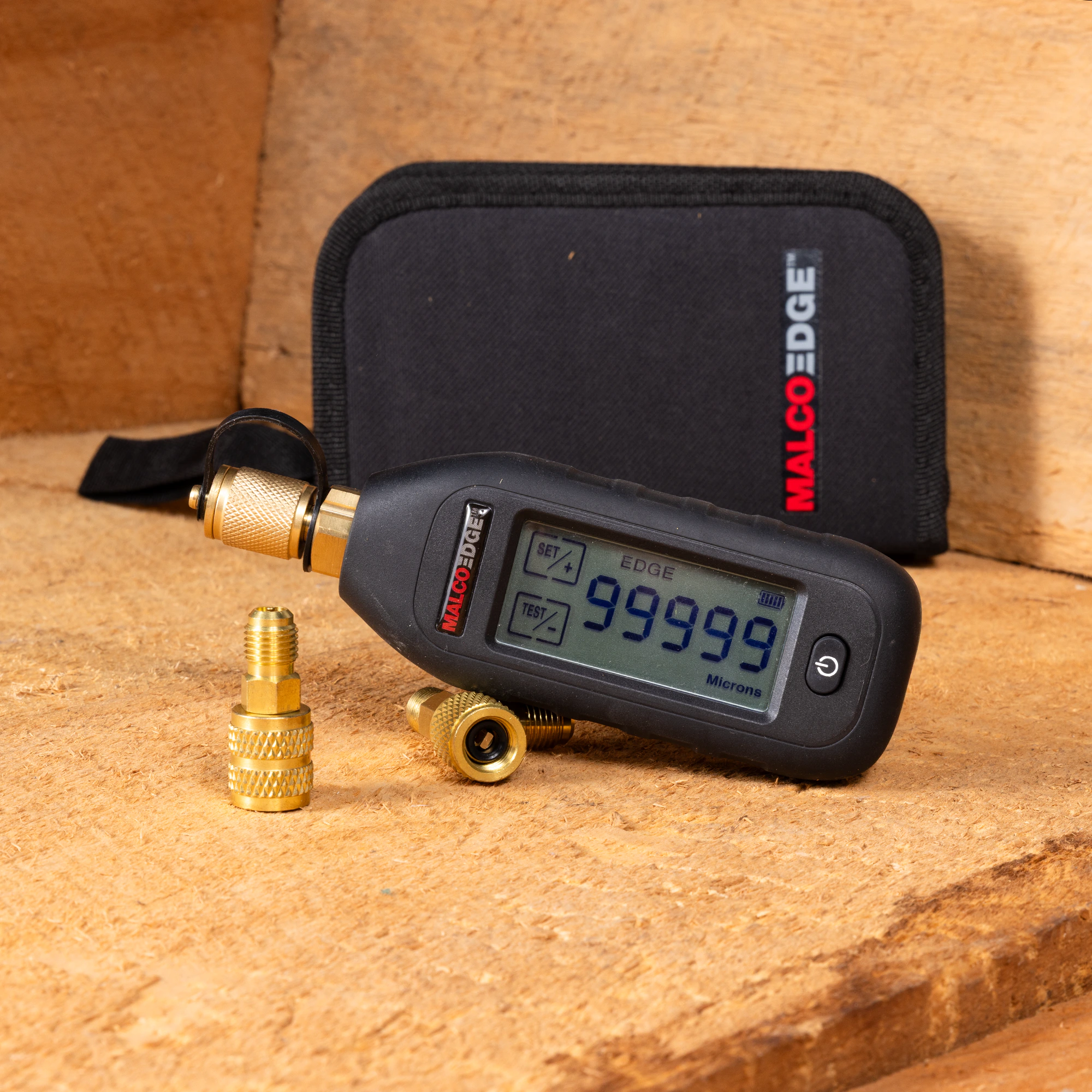
The MalcoEdge™ DVG1 Digital Vacuum Gauge delivers precise, professional-grade vacuum measurement from 0 to 99,999 microns, making it ideal for HVAC system evacuation and leak testing. Built for use with standard, A2L, and A3 refrigerant systems, the DVG1 includes essential accessories: a 1/4 SAE swivel tee, a 1/4 SAE to 5/16 SAE adapter with core depressor, and a durable zippered soft case. The backlit touchscreen display ensures visibility in any environment, while the vacuum decay test function with a 90 dB alarm removes guesswork from leak-down testing. With a 1-second refresh rate, adjustable auto-off, and 100-hour battery life on 3-AAA batteries, this tool offers top-tier reliability and convenience for HVAC pros.
Features
- Accurately measures vacuum levels between 0-99,999 microns with a fast one-second refresh rate.
- Backlit display to clearly show vacuum level in any work environment with convenient touch screen controls.
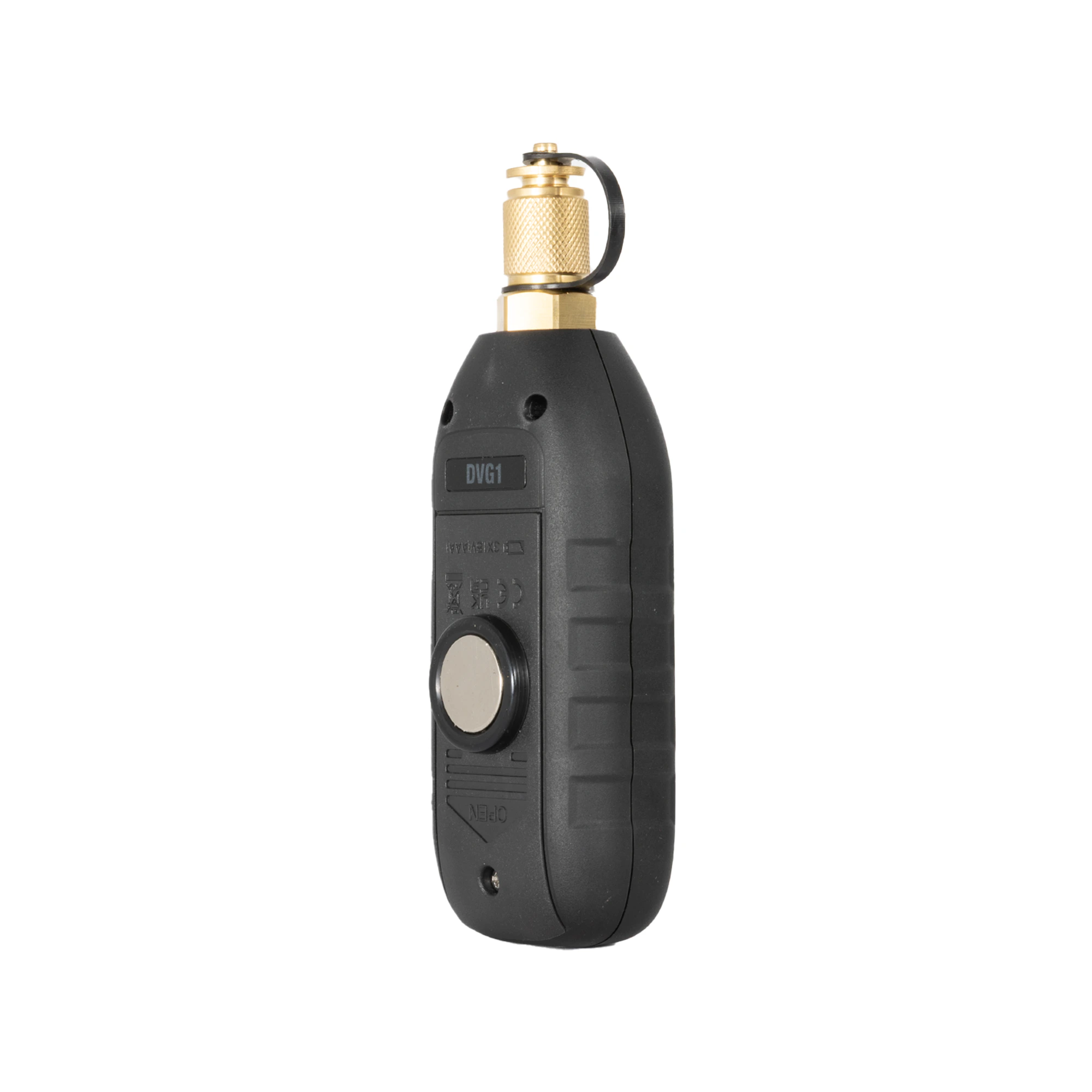
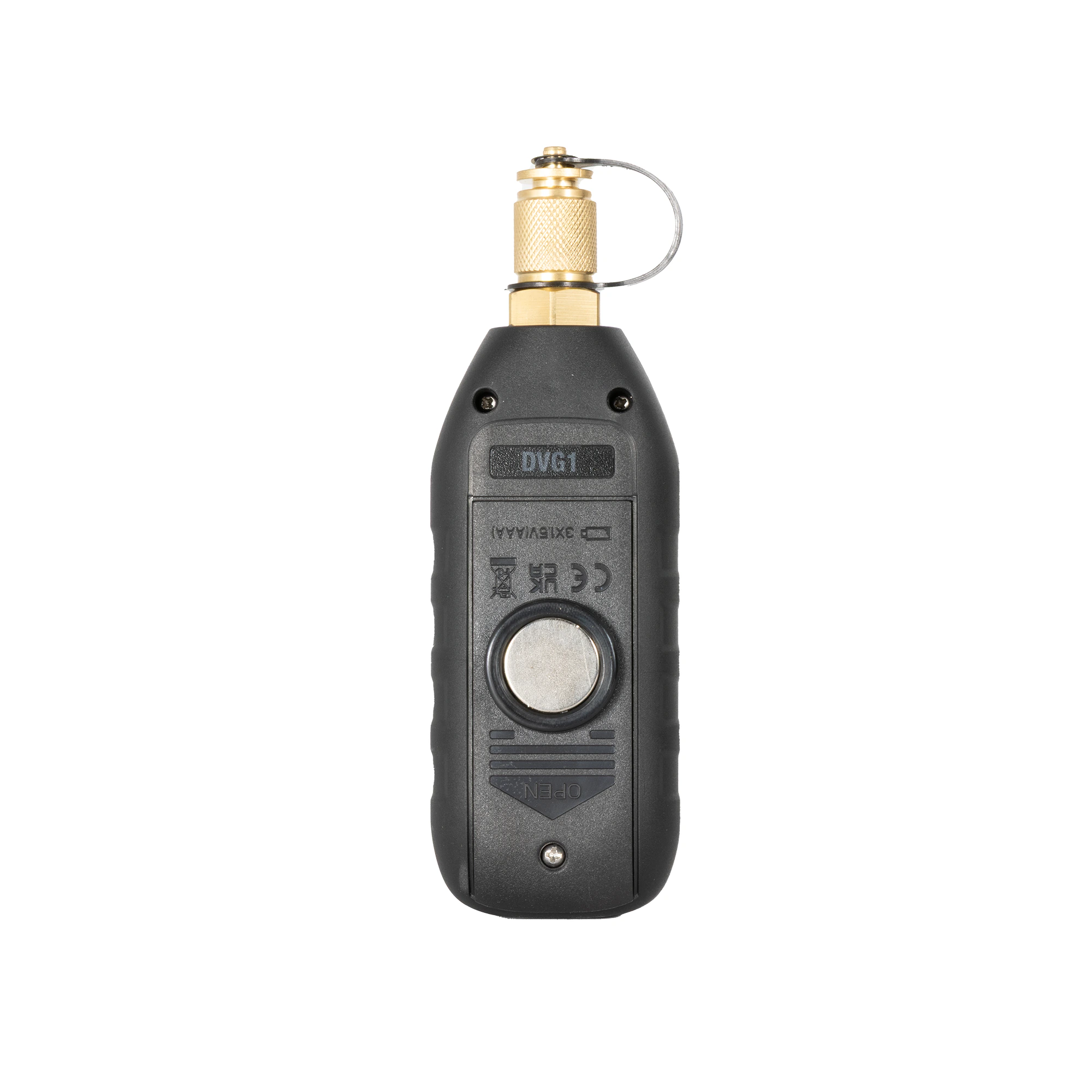
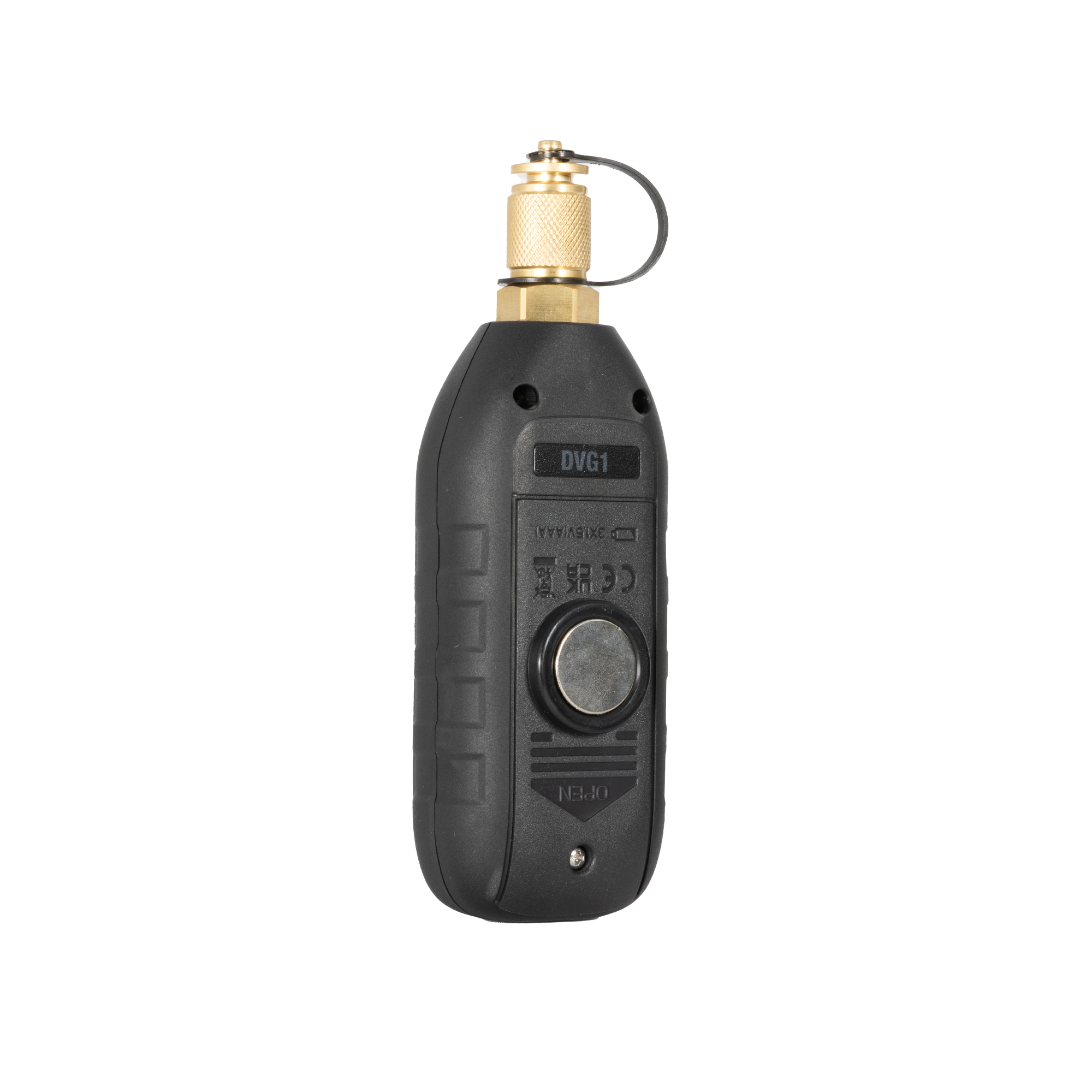
- Magnetic back allows for convenient storage both on and off the job.
- Adjustable auto-off function preserves battery life.
- Rated for all standard, A2L, and A3 system applications.
FAQs
Q1: How do I change units of measurement on the MalcoEdge Digital Vacuum Gauge?
A1: Press the “set/+” touch key. Available units of measure are Torr, Pa, mBar, inHG, and Microns. Press “set/+” or “test/-” to scroll to the desired unit. Once the desired unit is flashing, press the power button to set.
Q2: What micron level should I draw my HVAC system down to when using the MalcoEdge Digital Vacuum Gauge?
A2: We recommend referring to the equipment manufacturer for the target vacuum range. Our vacuum pumps can pull systems down to 15 microns, but many manufacturers recommend a minimum of 300 or 500 microns.
Q3: How do microns compare to PSI?
A3: 1 micron of mercury equals 0.000019337 PSIG. For reference, if you get under 500 microns you are dealing with a deep vacuum.
Q4: Can I clean the sensor on the Malco DVG with alcohol?
A4: Yes. However, we recommend using a minimum of 95% isopropyl alcohol or higher, as lower concentrations are not suitable for cleaning electronics.