
In today’s HVACR installations, performance expectations are higher than ever. Contractors are being asked to deliver powerful, efficient systems—without sacrificing aesthetics or sound levels. When gravity drainage isn’t an option, the condensate pump becomes a critical piece of the install. And not all pumps are built the same.
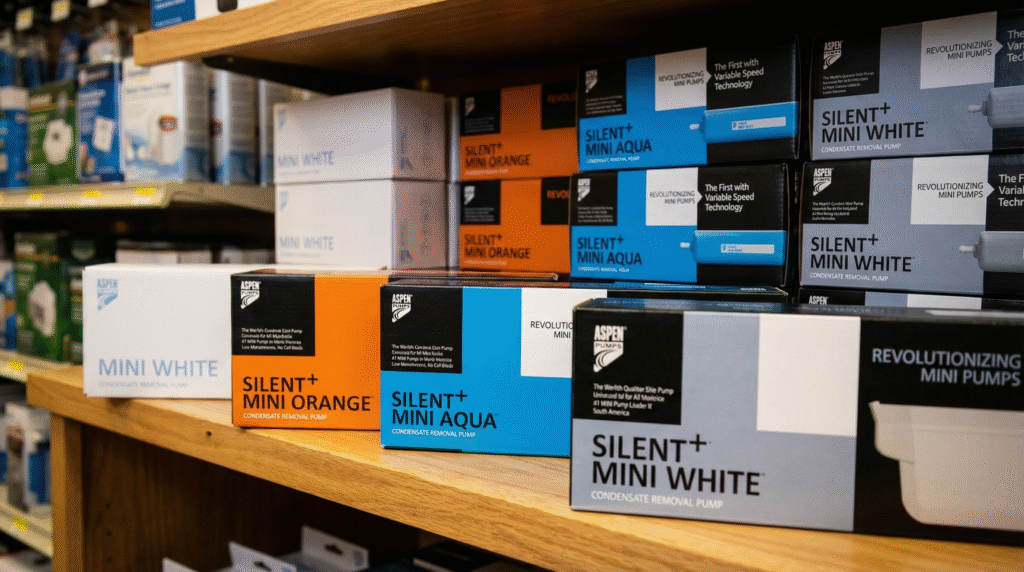
Enter Aspen’s new, industry-leading line of mini condensate pumps—engineered to deliver ultra-quiet operation, intelligent performance, and installation flexibility in even the most compact applications.
We sat down with Dan Rushton of The Malco Group to unpack what sets this lineup apart—and why quiet performance should never come at the expense of performance or reliability.
What Is a Mini Condensate Pump?
A mini condensate pump is a compact pump designed to be installed discreetly in or near a mini-split, dehumidifier, or other condensate-producing system. Its job is to mechanically pump condensate away from the HVACR equipment to a nearby drain when a gravity drain installation is not feasible. This helps protect equipment, prevent water damage, and ensure consistent system operation.
Why Are Mini Pumps Typically Noisy?
Many mini pumps on the market use piston pump technology. While effective, piston pumps are inherently louder due to the piston’s constant reciprocating motion. This cycling generates more noise, which can become noticeable while the HVACR system is running.
Aspen mini pumps use rotary diaphragm pump technology, which operates more smoothly and significantly reduces noise compared to traditional piston-based designs.
How Does Variable Speed Reduce Pump Noise?
Traditional condensate pumps typically operate at one speed: full speed. Whether the system is producing a small amount of condensate or running at peak output, the pump cycles at maximum power—often creating unnecessary noise in the process.
Variable-speed technology changes that equation. Instead of running full throttle every time it activates, a variable-speed pump adjusts its performance to match the actual condensate production of the unit. In practical terms, that means the pump only runs when it needs to—and only at the speed required to move the water being produced at that moment.
The result is a system that operates more quietly and more intelligently. Avoiding constant full-speed cycling—common in traditional piston-style pumps—variable-speed technology reduces sound output while also improving overall efficiency. It’s a smarter way to manage condensate removal, especially in applications where noise control and clean finishes matter most.
How Quiet Are These Pumps?
At just 16 dBA, Aspen mini pumps are quieter than a whisper. In practical terms, this means the pump will appear virtually silent when the HVACR system is operating, making it ideal for residential spaces, offices, and other noise-sensitive environments.
Can a Quiet Mini Pump Still Move Condensate Vertically?
Absolutely! Quiet operation doesn’t come at the expense of performance. With a recommended maximum head of 33 feet, Aspen mini pumps can move condensate vertically with ease while maintaining high reliability and consistent performance when properly installed.
What Causes Mini Pump Vibration?
Vibration is typically associated with older technology pumps or improper installation. It may occur if the pump is not securely fastened or if it is allowed to run dry. Following the product’s installation instructions help prevent these issues, ensuring smooth, quiet operation throughout the pump’s life.
Bottom Line
Aspen mini pumps deliver what today’s HVACR installations demand: true quiet, intelligent operation, and reliable condensate management—without compromise. With rotary diaphragm technology, variable-speed performance, and compact installation flexibility, this isn’t just another mini pump. It’s a smarter standard for modern installs.
Ready to make the upgrade? Discover the mini pump line here: https://malcogrp.com/aspen-mini-pumps/